

Himalayan balsam (Impatiens glandulifera)
This fast-growing annual plant is famous for its seed pods that explode open when touched, launching seeds up to 7 meters away.
Each single plant produces up to 800 seeds, letting it quickly crowd out native wildflowers and plants for space and light.
Despite the drought this year our gardens still have many plants, pretty but invasive.


CLIVIAS...
getting flowers!
Clivias need at least a 6-8 week chilly period in winter with very little water. Minimal nitrogen rich feeding. Only start watering when flower spike shows. Then they can come indoors from greenhouse. You must leave pot bound for good flowering.
SUCCULENT PROBLEMS TO WATCH FOR


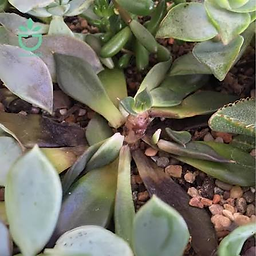
REMEMBER A rosette opening up is asking for more light, wrinkled leaves need water. A softening stem or leaves have had too much!
Please read this attachment ~
25 succulents to grow indoors

Aeoniums
~ Are endemic to the western Canary Islands of Tenerife, La Palma, El Hierro, La Gomera and Gran Canaria. The populations found on the Iberian Peninsula, the Moroccan coast and the Mediterranean are likely neophytes or introduced
~ The plants of the genus Aeonium are very efficient in adapting to any environment and very robust.
~ In fact these plants have been studied by NASA for future use inside a spacecraft.
~ Its name derives from the Greek word aionios, which means eternal, immortal, a name that has earned both for its strength and for its affinity with the Sempervivum genus.
~ The Aeonium is an good example of the great family of succulents; they can tolerate long periods of drought, as well as short periods of intense cold. However in our Winters in Europe is is better to protect them from frost.


PLANT SHOPPING ONLINE
Ian’s recommendations and comments.
https://www.promessedefleurs.ie
An amazing variety of perennials, annuals, shrubs, trees and seeds. I’ve found their 9cms pots rather unreliable in terms of quality, but anything from 1l upwards pretty good
https://www.sousunarbreperche.fr/
Specialises in woodland and edge of woodland plants, many of which are sourced in Japan. Many unusual species and varieties.
Nursery which does mail order, but is only in Bergerac, so easy to visit. Excellent variety of herbaceous perennials, Also hosts, twice yearly, the best plant fair for plantsmen and women.
https://www.pepiniere-aoba.com/fr/
Organic nursery which has a super selection of unusual species and varieties, specialising in plants for shade and climbers. Specialist collections of Epimedium, Polygonatum, Asarum, Schizophragma, Weigela, la asiatic Hydrangeas, asiatique Rubus and botanical Iris.
https://www.achat-vente-palmiers.com/fr/
Excellent for tropical plants such as palms and bananas, but also has a good selection of trees and plants from other plant families.
Dürer's beautiful hare is a reminder that this year so many members have remarked on their numbers.
We had not seen any around our home in farmland for years. Now we drive cautiously as they are bounding across our roads so often. Is it because this year so many fields have been left fallow?

For one of our winter meetings back in 2018 we were delighted that Roger Adams the artist gave us all a chance to draw one in a fun meeting. How different they were too.

WHY MY DAY LILIES ALL COME OUT ON THE SAME DAY!
Plants, trees, and shrubs flower “on time” each year because they don’t rely on weather alone—they use internal biological clocks and light‑based cues that remain stable even when climate conditions fluctuate. The key mechanisms are photoperiodism, circadian rhythms, and temperature sensing, which together allow plants to track the seasons with remarkable precision.
Concise takeaway
Plants know when to flower because they measure day length (photoperiod) using light‑sensing proteins and coordinate this with an internal circadian clock. These cues are far more reliable than temperature, so even with climate change, many species still flower at roughly the same week each year.

How plants actually “tell time”
1. Photoperiodism: measuring day length
Plants detect how long the night is using specialized photoreceptors (phytochromes and cryptochromes).
-
Short‑day plants flower when nights are long (e.g., chrysanthemums).
-
Long‑day plants flower when nights are short (e.g., clover, wheat).
-
Day‑neutral plants flower based on age or other cues.
Day length is extremely predictable year to year, unlike temperature—so it’s a reliable seasonal signal.
2. Circadian clock: the plant’s internal timekeeper
Plants have a built‑in 24‑hour molecular clock that helps them interpret light signals and align their development with the seasons.
This clock:
-
Anticipates dawn and dusk
-
Coordinates gene expression
-
Integrates with photoperiod signals to trigger flowering
Even if weather is unusually warm or cold, the internal clock still runs.
3. Temperature cues (secondary but important)
Plants also use vernalization (exposure to winter cold) and heat accumulation to fine‑tune flowering.
However, climate change is disrupting these cues, causing:
-
Earlier flowering in some species
-
Mismatches between flowering and pollinators
Still, photoperiod often dominates, keeping flowering roughly on schedule.
Why flowering still seems so precise despite climate change
Because day length never changes, plants rely on it as their primary calendar.
Temperature shifts may speed up or slow down growth, but the final “go” signal for flowering often depends on photoperiod + circadian timing, which remain stable.

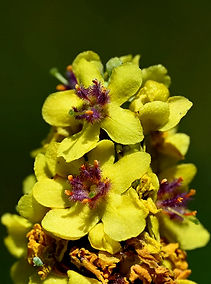
Verbascum nigrum
or black Mullein
Loving our calcaire soil a common sight in our fields right now.
Historically, mullein has held a special place in traditional herbal medicine. Ancient cultures used it for respiratory support, soothing the throat, and addressing skin concerns.
It was even called the “candlewick plant” in medieval Europe due to its dried stalks being used as wicks in lamps. Common mullein reproduces by seed, and a plant can produce between 136, 000 to 175,000 seeds. Seeds can remain viable for 35 to 100 years or longer. Because the seeds need light to germinate, germination is restricted to primarily bare soil after disturbances.

This is a very clever idea
The basics – take a strip of plastic or bubble wrap, wax paper (or other suitable material) about 15–60 cm long and 10–15 cm high, quality seed-starting mix, elastic or tape, a tray, and labels. Spread moist seed starting mix along the strip, about 1–2 cm thick, leaving a bare section at one end so it will roll easily.
Roll it up gently into a spiral, secure it, then stand it on end in a tray. Firm the soil from the top and plant your seeds into the visible spirals at the recommended depth, misting lightly and covering with plastic to hold humidity until they germinate.
Want more advice? go to YouTube
Replanting a forest.......
REPLANTING
-
Initial phase (2022–2023):
-
After the tornado and violent storms of June 2022, foresters spent months clearing fallen timber, removing stumps, and grinding debris.
-
By summer 2023, replanting began in earnest, with thousands of maritime pine seedlings planted using specialized tools like planting canes.
-

In 2022 a violent tornado hit the Fôret de la Double damaging about 20,00O hectares of forest with 8,000 hectares of resinous trees (mostly pine) suffering the worst losses. Many stands were not only blown down but later weakened by disease, making replanting urgent!
Here is a quick look at what happened after that.......

HOW DID THEY START ?
-
Priority was given to the original resinous plots, since they were most devastated.
-
Some landowners are replanting mixed stands with hardwoods (feuillus) to reduce vulnerability to future storms and pests.
-
Forestry cooperatives are supporting owners financially and technically, aiming to rebuild productive forests while improving resilience.
RECOVERY OUTLOOK
-
Short term (2023–2025):
-
Replanted pines are establishing, though growth is slow in drought‑prone summers.
-
Soil stabilization and weed control are critical to ensure survival of seedlings.
-
-
Long term (10–20 years):
-
Forests will gradually regain canopy cover, but timber production from pine will take decades to recover.
-
Increased emphasis on species diversity may make Dordogne’s forests more resistant to extreme weather events.
-

Author's own photographs taken after the devastation to the forest surrounding their home JS
Diversity in Planting - the good news
These species are being added to diversify the forest structure and reduce vulnerability to storms, pests, and fire.
Hardwoods known as feuillus in France include:
-
Oak (chêne): Valued for its strength and long-term timber potential.
-
Chestnut (châtaignier): Traditional in Dordogne, offering both wood and ecological benefits.
-
Birch (bouleau): Fast-growing, helps stabilize soils and create mixed stands.
The replanting program aims to rebuild production forests while restoring ecological balance. Owners are encouraged by forestry cooperatives (like Alliance Forêts Bois) to adopt mixed planting schemes. Over the next 10–20 years, the Double should regain canopy cover with a more varied and climate-resilient forest.
HOW TO SPOT THEM They have plastic collars to stop the deer eating the bark!

Gardens to visit in france
This website provides not only links to gardens to visit in our area, but around France by region.